The void between seeing a quick online demonstration and handling a genuine emergency is large. I have actually seen calm, capable people freeze when a coworker falls down, and I have watched others relocate with clear function due to the Click to find out more fact that they had been drilled correctly. That distinction seldom boils down to personality. It originates from the right first aid training, practiced enough to come https://cprfirstaidtoday.com/ to be muscular tissue memory, and upgraded often enough to be relevant. https://firstaidcoursezoom.com/ First Aid Pro and comparable carriers construct programs that shut that space, not by making people experts in whatever, yet by straightening first aid actions with exactly how emergencies actually unfold.
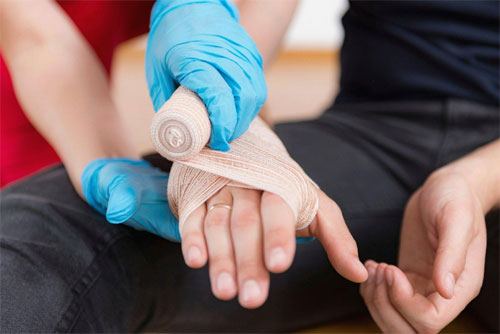
What professionals educate that do it yourself videos do n'thtmlplcehlder 4end. The net can show you how to do CPR in under five mins. What it can not offer you is the feel of an appropriately clinically depressed breast, the resistance of ribs, the decision-making structure when the person on the flooring is your associate and the room really feels as well small. A specialist first aid course translates guidelines right into repeatable activities under stress. It is not simply skill purchase, it is anxiety inoculation. In excellent classes, teachers stage unpleasant, incomplete circumstances. A child who will certainly not stop throwing up. A diabetic person that is lucid one minute and slurring the next. A spectator who yells suggestions that problems with what you were shown. You obtain trained not just on the technique, but on sequencing, prioritizing, and connecting. That context is what makes first aid and CPR useful past the tranquil boundaries of a video. Anatomy of a durable first aid training program
Every supplier asserts evidence-based mentor. The distinction shows in just how the day is structured, what is highlighted, and just how the program is adapted to the participants. First Aid Pro styles around 4 pillars: importance, realism, rep, and recognition.
Relevance seems noticeable, however it calls for curation. A construction team does not need the same emphasis as a child care center. The very best trainers meeting organisers ahead of time and change the equilibrium. More time on crush injuries on one website, much more on anaphylaxis and choking for one more. They likewise extract facts. Memorizing every melt category seldom helps. Recognizing whether to cool down the melt for 20 mins with running water, protect the area, and prevent ointments or ice does.
Realism suggests hands-on time on the flooring, not just sanitised drills. You practice with adult, kid, and baby manikins. You learn to use a tourniquet with gloves that really feel too huge and fingers that feel also slow. You get feedback when you drift towards harmful improvisation. In a solid program, also the role-playing has structure. A simulated casualty could be mildly combative after a head knock. You learn to safeguard the spine without obtaining dragged right into a wrestling match.
Repetition develops the neural grooves you rely upon when your heart is kicking. Ten proper compressions feel various from a hundred. The second hour you do CPR, you quit thinking about where to put your hands. With an AED, the act of turning it on, peeling off the pads, and following the prompts becomes automated. Pupils frequently undervalue how much repetition is needed. Expert courses see to it you get it.
Recognition is twofold. First, pattern recognition. Is this fainting or stroke? Bronchial asthma or anaphylaxis? The starting actions overlap, however an appropriate read saves minutes that matter. Second, official recognition in the type of a first aid certificate. Accreditation is not vanity. Lots of work environments call for a first aid and CPR course to satisfy legal commitments. A lot more importantly, reputable certificates signal that your training aligns with current resuscitation council guidelines which you passed an assessed practical component.
The useful core: CPR done to standard, not to memory
CPR is the core around which most first aid courses are constructed. In a CPR course with a seasoned teacher, tiny information get tuned that seldom register on paper. Trainees learn to go for a tempo near 100 to 120 compressions per minute, yet as opposed to counting to 30 in their head, they sync to a beat. Some instructors make use of a metronome. Others utilize a track that strikes the ideal tempo. The point is not music trivia, it is dependable rate control.
Depth is dealt with by feeling and by responses gadgets. As well shallow and you flow nothing. Unfathomable on a tiny adult and you run the risk of injury. Modern manikins with comments tell you if you are hitting 5 to 6 centimeters on an adult. A seasoned trainer will certainly also see your shoulder placement and clarify just how to shield your very own back. You can not aid if you wound yourself mid-rescue.
Ventilations are instructed pragmatically. If you are trained and prepared, you deliver 2 breaths after 30 compressions. You discover to develop a seal, raise the chin, and watch for upper body increase. If you can not obtain a seal or you do not have a barrier gadget, you maintain compressing. That judgment, taught without dogma, mirrors current guidance in many regions and values real-world constraints.
AED combination commonly endures in neighborhood training. First Aid Pro instructors run drills that interleave compressions with fast AED setup to ensure that hands-off time remains under 10 secs whenever possible. You exercise ripping the pads off the plastic while someone else continues compressions, after that clear the chest at the punctual and return to right away after a shock. That choreography is what adjustments outcomes.
The parts of first aid individuals usually get wrong
First-time learners infatuate on the remarkable abilities. They wish to quit significant bleeding or open up a respiratory tract. Teachers know the catches that trigger problems later.

Calling for aid is one. Individuals ignore the moment it takes to locate a phone, unlock it, and navigate to an emergency situation number under anxiety. Great courses choreograph the phone call. Designate it. Validate it happened. If the building has a protection desk or emergency situation response group, know the quickest course to them and the most basic way to claim where you are. I still keep in mind a situation in a stockroom where students kept yelling a person call 000 without realizing they were the only ones in the aisle.
Scene security is another. Hurrying towards a fallen down individual near an online forklift lane or a roadway verge prevails in circumstances. Trainers pause the drill and reset. The lesson lands more difficult than a paragraph in a manual.
Finally, recuperation positions and tracking commonly go sloppy. Rolling a throwing up individual onto their side while safeguarding the head can be discovered quickly, however the follow-through is watching breathing very closely, not walking away due to the fact that the scary part mores than. Trainees are reminded that numerous emergencies unravel over 10 to half an hour. Reassurance, heat, and continuous assessment belong to first aid, not aftercare.
Why updates and refresher courses matter
Guidelines do not change for sporting activity. They change when new evidence clears up what works. Compression-only CPR became much more accepted for inexperienced rescuers since data showed that hard, fast compressions are better than screwing up breaths. Tourniquet usage altered from last resort to earlier consideration for severe arm or leg bleeding in numerous settings once civilian-grade gadgets showed safety in skilled hands. Training courses that matter keep pace, and so need to you.
A solid rhythm is to book a CPR refresher course every year and a full first aid course every 2 to 3 years, or regularly if your role requires it. The muscular tissue memory softens faster than you think. I have seen trained team enhance visibly by the third or fourth scenario in a refresher course, merely since their bodies kept in mind exactly how it needs to feel.
Customising first aid and CPR courses to the genuine risk
The exact same checklist does not put on every team. When I collaborate with a high school, we drill on sports injuries, asthma, anaphylaxis, and fundamental back care. In a business cooking area, we hang out on burns, lacerations, and chemical exposures from cleaning up representatives. A workplace with a great deal of public foot web traffic techniques passing out procedures, diabetic lows, and stroke acknowledgment, including a plan to fulfill paramedics at the elevator.
It is not simply web content, yet logistics. Where is the AED, and just how quickly can you obtain it? In a large place, the distinction in between a 90-second and a 4-minute access is frequently whether the tool is placed centrally and well-signed. Some groups map the AED and rehearse the route. They time it. That enters into the training day.
Assessment that feels like technique, not performance
Good evaluation does not try to fool you. It develops adequate uncertainty that you are compelled to assume and sufficient framework that you can use what you learned. In a First Aid Pro course, a typical circumstance may begin with a collapsed grownup in a stairwell. You listen to agonal gasps. The teacher expects 3 things prior to you touch the patient: that you check for threats, that you send for aid and AED, and that you analyze responsiveness and breathing quickly and properly. Only after that do compressions begin. You are scored not simply on the technical movements however on sequencing, quality of commands, and reliable delegation.
Paper tests still appear, usually several choice. They exist to catch misunderstandings that skills method may hide. The conversations around incorrect answers are where discovering deepens. For instance, many individuals misremember the appropriate proportion of compressions to breaths for 2 rescuers with a baby. Talking it with cements it far more than presuming an option.
Pieces of gear worth understanding well
You will not become a paramedic in a one-day first aid course, yet you can come to be efficient with a few tools that multiply your effectiveness.
Bag-valve masks show up in some programs, however, for many work environments, pocket masks with one-way shutoffs or resuscitation keyrings are extra functional. You learn where to keep them so they are reachable within seconds.
AEDs vary. Some systems are fully automated, delivering a shock without you pressing a button. Others call for verification. Pads differ in placement overviews. Obtaining knowledgeable about the certain version in your structure saves fumbles later. I recommend groups to open the AED, power it on briefly, and listen to the voice motivates throughout training. The majority of systems have training modes to stay clear of unintentional shocks.
Tourniquets are straightforward with method, and dangerous without it. The technique is not hard, but individuals frequently quit transforming prematurely when the discomfort response from the casualty is solid. Instructors educate you to tighten until bleeding quits, after that secure the windlass. Mark the moment. Reassess. You do not cover the tourniquet or loosen it. That level of clarity reduces second-guessing in the warmth of the moment.
Epinephrine auto-injectors are lifesavers in anaphylaxis. Courses instruct recognition, consent, shot through clothes when essential, and post-administration tracking, including the reality that signs and symptoms can rebound which a 2nd tool may be needed if the ambulance is delayed.
Glucose gels or fast sources of sugar are covered for hypoglycemia in known diabetics who are conscious and can ingest. This is where nuance matters. Trainers stress what not to do as much as what to do. You do not offer anything by mouth to somebody drowsy or throwing up. You take care of respiratory tract and require help.
The subtle abilities: communication and management in tiny moments
First help is a team sport, despite having unfamiliar people. The capacity to give simple, straight guidelines under stress beats expensive method. In circumstances, trainers typically train students to talk basically, clear lines: You, in the blue t-shirt, phone call 000 and ask for a rescue. Tell them we have a grown-up, not breathing typically, suspected cardiac arrest. Bring the AED from reception. That uniqueness avoids diffusion of obligation. It likewise relaxes bystanders that intend to aid yet do not know how.
You additionally find out to take care of the space. Develop a bubble for the casualty. Setting someone at the door to reroute foot website traffic. Ask a colleague to bring a covering or layer to stop hypothermia after bleeding or shock. These are not attractive actions. They are the scaffold that keeps the major treatment clean.
Documentation issues once the paramedics take over. A good first aid course reveals you exactly how to turn over succinctly. Age or estimated age, what you saw, what you did, times if known, any kind of medicines made use of, any type of allergic reactions stated, and whether there was head injury. I maintain a psychological design template because that discussion often happens with adrenaline still high.
Choosing a provider without guesswork
Not all first aid courses are produced equal. You do not require to become a certification expert, but you must feel comfortable asking pointed inquiries before booking.
- Is the program nationally acknowledged or straightened with the pertinent resuscitation council guidelines, and will certainly I receive a first aid certificate upon successful completion? How much hands-on time will certainly I obtain with grown-up, child, and infant manikins, and do you use feedback gadgets for CPR deepness and rate? Do you adjust scenarios to our workplace risks, and can we organize training in our atmosphere to practice AED access and communication paths? What are your trainers' histories, and how lately have they refreshed their very own qualifications? How is assessment performed, and what support do you provide for CPR refresher course scheduling?
You will observe none of those inquiries request for least expensive price. Cost matters, however value lives in realistic look and repetition, not in a plastic card.
The worth of mixed understanding done right
Many carriers, consisting of First Aid Pro, offer blended training courses where concept is finished online prior to the useful session. When implemented effectively, this model is efficient. You take in composition, legal concepts, and hazard identification at your pace, then spend class time practically totally on drills. The trap is when on-line modules are bloated or when practical sessions are hurried since the routine assumes theory changed technique. When you see a four-hour home window advertised for a full first aid and CPR course with a dozen participants, question whether you will get enough floor time.
A good combined version resembles this: two to four hours of involving on the internet web content with brief tests, after that a useful block where the trainer concentrates on abilities, situations, and assessment. You still sweat. You still repeat till it clicks. The benefit is that discussions are sharper due to the fact that everyone gets here with the exact same standard theory.
What adjustments as soon as your group is trained
Training is not an end state. It activates other little, compound modifications that elevate safety. After a First Aid Pro session, many offices silently reorganize their setting. The AED gets relocated from a locked cabinet behind function to a visible wall surface near the primary entry with clear signs. First aid kits lost messy, ended things and add what issues for that specific place: even more melt dressings in cooking areas, more trauma pads at sites with machinery, child-sized elements in schools.
On the human side, teams start determining that feels comfy as an initial -responder, that will certainly deal with the emergency situation phone call, and who will satisfy paramedics. That pre-assignment smooths actual events more than any poster on a break area wall surface. I have actually likewise seen companies include quarterly five-minute drills. One person reveals AED run, and somebody times how much time it takes to get to the device, return, and turn it on. No dramatization, just a routine that keeps the path clear and the muscular tissue memory alive.
Real circumstances that reveal the difference
A logistic depot that trained 3 weeks previously had a driver collapse near the loading docks. A colleague heard agonal gasps and did not blunder them for regular breathing since they had exercised that noise in course. She sent out a jogger for the AED, started compressions within 30 seconds, and passed the call script to someone else that was already dialing. The AED came to the two-minute mark. A shock was encouraged and delivered. The driver made it through to discharge. Debriefing later, the team concurred that the crucial factor was not just courage. It was that they had actually practiced the exact choreography on the exact same concrete floor.
At a main school after a first aid and CPR training day, a trainee with a recognized peanut allergy began to wheeze and developed hives during lunch. An educator acknowledged the signs early, used the pupil's epinephrine auto-injector within minutes, and had the front workplace call a rescue and inform moms and dads with particular language. The youngster maintained prior to paramedics arrived. Without training, the delay might have stretched enough time to make complex the response.
These are not motion picture saves. They are normal people doing normal points appropriately and swiftly. That is the goal.
The limits of first aid, stated plainly
No training course can transform you into clinical team. There are limits that you ought to appreciate. You do not carry out drugs other than those allowed in your territory and within your training. You do not identify. You treat life hazards you can identify and protect against degeneration. You hand over to experts with a clean, clear summary and the confidence that you did the basics well. Excellent training instructs humbleness alongside ability. It maintains you from overreaching and advises you that often the most crucial move is resting with a person, maintaining them warm and calm while viewing their breathing.
A practical path forward
If you handle a team or simply wish to be useful when it counts, right here is a workable technique that balances ambition with reality.

- Book a First Aid Pro first aid course that includes CPR training. If you are time-poor, consider blended distribution, yet focus on a provider that assures significant hands-on practice. Map your space. Know the AED location, the quickest path for paramedics, and any hazards that would slow down or endanger a response. Readjust signs if it is unclear. Schedule a CPR refresher course within twelve month. Include short internal drills, like AED access runs, to maintain confidence between official training. Update first aid packages to reflect actual threats. Establish a tip to examine expiry dates quarterly. Stock kid or infant things if your setting warrants them. Identify duties during a case. Agree who will call, who will lead the scene, and who will certainly satisfy responders. Create it down where people can find it under stress.
The throughline in all of this is regard for reality. Emergency situations are short in a timely manner, untidy, and full of noise. Professional first aid courses do not get rid of the concern, but they instruct you to relocate anyhow, with steps that make a difference: examine the scene, telephone call for assistance, begin the appropriate actions, and maintain going up until someone with an uniform and a cot takes control of. That is the pledge of proper first aid training, and it is one guarantee worth cashing in prior to the day you require it.